Terra Australis: Navigating the Glacial Spine of Torres del Paine
By Gabriel Montoya, Andean Wilderness Specialist
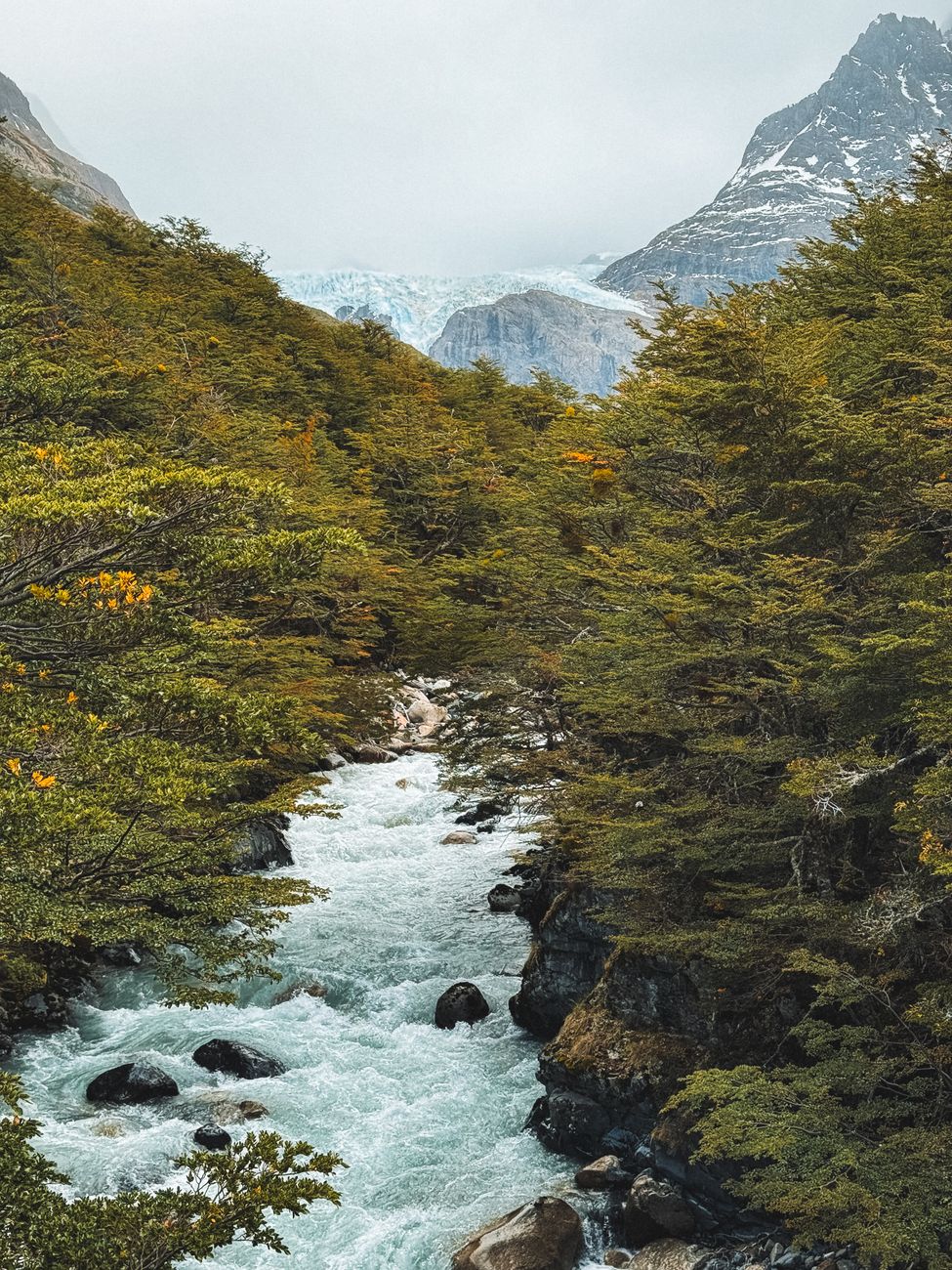
Table of Contents
To venture into the extreme south of Chilean Patagonia is to step outside human-scale geography. Here, between the Patagonian Ice Field—the largest non-polar ice sheet on earth—and the windswept pampas, weather is not a backdrop; it is an active antagonist that tests your patience, humility, and layered garments every hour.
1. The Kingdom of Katabatic Winds
Approaching Lake Pehoe, our four-wheel-drive vehicle shudders as gusts exceeding 100 kilometers per hour strike the driver side. These are katabatic winds, born over the icy plateau of Campo de Hielo Sur, gaining velocity as they plummet down glacial gullies. The surface of the lake, colored milk-turquoise by suspended rock flour, erupts into vertical plumes of spray known locally as 'el viento blanco'.
Yet within these sudden squalls lives a startling vitality: herds of wild guanacos graze serenely among golden coirón grass, while Andean condors with three-meter wingspans carve effortless circles overhead without flapping once.
2. The Cuernos: Geology on a Gigantic Scale
The iconic Cuernos del Paine—two-toned peaks where pale granite plutons intruded into dark sedimentary rock twelve million years ago—stand like primeval fortresses. Glaciers such as Grey and Dickson grind down these massifs inch by inch, calved icebergs drifting into icy lagoons with deep, explosive reverberations that sound like distant artillery fire.
Trekking along the French Valley requires complete focus. The trail winds through dense groves of southern beech (lenga and ñire) whose branches are twisted into grotesque, wind-sculpted spirals draped with pale lichen.
3. Field Notes on Gear & Survival
Standard alpine equipment frequently fails in Patagonian conditions due to relentless lateral precipitation and moisture-laden cold. Key field recommendations:
- Hardshell Integrity: Three-layer GORE-TEX Pro membranes with heavy-duty YKK Aquaguard zippers are mandatory. Lightweight running rain jackets will be torn to shreds by brush and pierced by wind within thirty minutes.
- Trekking Poles: Carbon fiber poles can snap unexpectedly when jammed in rock fissures under violent gusts. Aircraft-grade aluminum poles with lever-cam locks provide dependable stability.
- Thermal Base: Merino wool in 250g/m² weights outperforms synthetic fleece by maintaining warmth even when soaked by lake spray.
4. Conservation & Low-Impact Travel
Torres del Paine National Park has suffered catastrophic human-caused forest fires in recent decades. The ecosystem recovers at glacial speeds; a single burned lenga tree may require eighty years to reach ten feet of height. Open campfires are strictly illegal throughout the park, and travelers must pack out every scrap of rubbish, down to apple cores and tea bags.
Planning an Austral Expedition?
111111 organizes private estancia stays, bilingual mountain guides, and remote logistics across Chile and Argentina.
Request Austral Dossier